

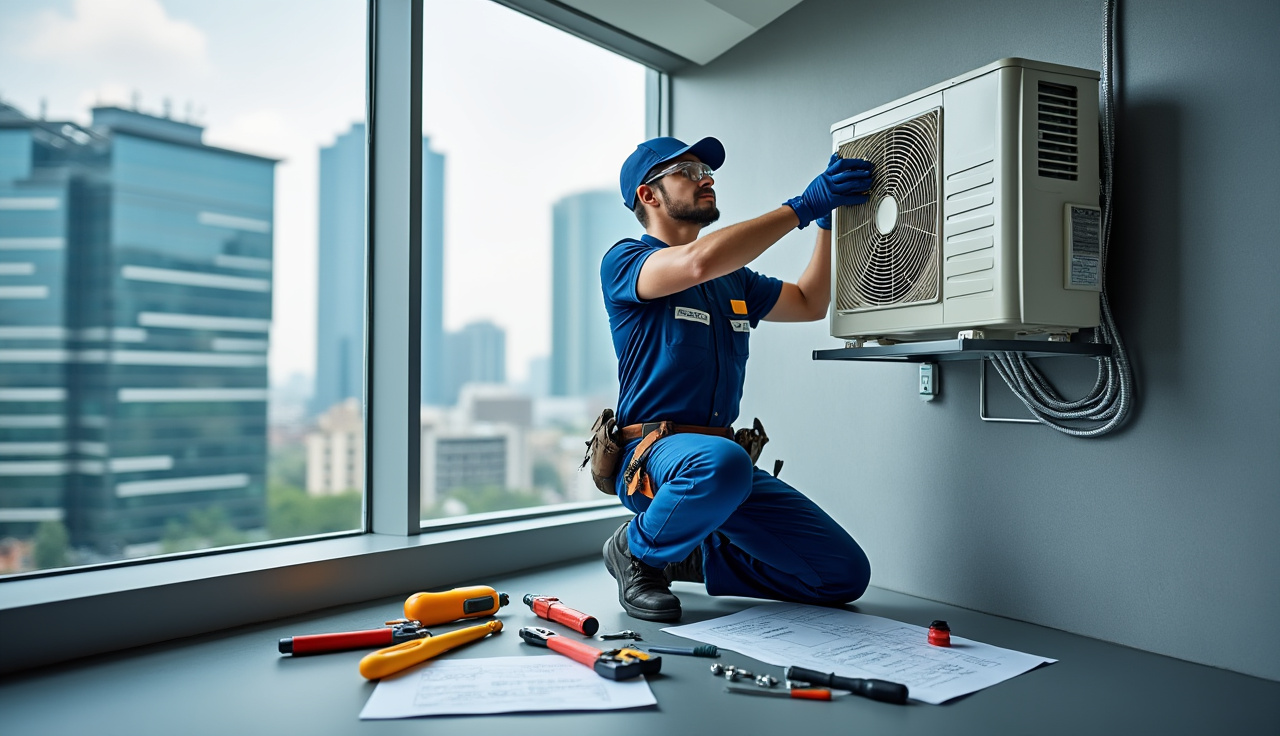
Understanding Commercial Air Conditioning Requirements: A Business Owner's Guide
As a business owner, understanding your commercial air conditioning requirements is crucial for maintaining a comfortable environment for employees and customers while managing operational costs effectively. Commercial HVAC systems differ significantly from residential units in terms of size, complexity, and maintenance needs. This comprehensive guide will help you navigate the essentials of commercial air conditioning, from system selection to energy efficiency considerations. Whether you're upgrading an existing system or equipping a new commercial space, these insights will help you make informed decisions that benefit your business for years to come.
Commercial vs. Residential HVAC: Key Differences
Commercial air conditioning systems are fundamentally different from their residential counterparts. Understanding these differences is essential when planning your business's cooling solution:
Size and Capacity Requirements
Commercial spaces typically require significantly more cooling power than homes:
- Commercial buildings have larger square footage
- Higher occupancy levels generate more body heat
- Business equipment produces additional heat load
- Multiple zones often need independent temperature control
- Ceiling heights are typically higher, affecting air distribution
While residential systems are measured in tons (with most homes needing 2-5 tons of cooling), commercial buildings might require anywhere from 10 to several hundred tons depending on the facility size and usage.
System Complexity and Components
Commercial HVAC systems incorporate more complex components:
- Modular design allows for scalability
- Variable refrigerant flow (VRF) systems for zone control
- More sophisticated control systems and building automation
- Economizers for free cooling when outside conditions permit
- Heat recovery systems to improve efficiency
- Commercial-grade filtration for improved indoor air quality
These advanced components require specialized knowledge for proper installation and maintenance, making professional expertise particularly important.
Installation Considerations
Commercial installation involves unique challenges:
- Rooftop units are common, requiring structural considerations
- Ductwork design is more complex with multiple zones
- Local building codes have stricter requirements for commercial spaces
- Permitting processes are typically more involved
- Installation often needs to work around business operations
Professional commercial HVAC contractors understand these challenges and can navigate them efficiently while minimizing disruption to your business.
Selecting the Right Commercial Air Conditioning System
Choosing the appropriate system for your commercial space involves several important considerations:
Types of Commercial HVAC Systems
Different businesses have different cooling needs. Common commercial system types include:
Rooftop Packaged Units:
- Best for: Retail stores, restaurants, and small offices
- Pros: Space-saving, all components in one unit, easier maintenance access
- Cons: Limited zoning capabilities in basic models
Split Systems:
- Best for: Small offices, shops, and light commercial applications
- Pros: Cost-effective, flexible installation options
- Cons: Requires both indoor and outdoor space for components
VRF/VRV Systems (Variable Refrigerant Flow/Volume):
- Best for: Hotels, office buildings, and mixed-use facilities
- Pros: Excellent zoning capabilities, energy efficient, simultaneous heating and cooling
- Cons: Higher initial investment, specialized installation required
Chilled Water Systems:
- Best for: Large commercial buildings, hospitals, and campuses
- Pros: Highly scalable, efficient for very large spaces
- Cons: Complex installation, higher maintenance requirements
Evaporative Cooling Systems:
- Best for: Dry climates, warehouses, and industrial spaces
- Pros: Energy efficient, effective in low-humidity environments
- Cons: Less effective in humid conditions, requires more maintenance
Sizing Considerations
Proper sizing is critical for commercial systems:
- Professional load calculations are essential (ACCA Manual N)
- Future expansion plans should be factored in
- Peak occupancy and usage patterns must be considered
- Climate zone and building orientation affect requirements
- Building envelope efficiency impacts system sizing
Oversized systems waste energy and cycle too frequently, while undersized systems struggle to maintain comfort and wear out prematurely from constant operation.
Energy Efficiency Ratings
Commercial systems use different efficiency metrics than residential units:
- EER (Energy Efficiency Ratio): Measures cooling efficiency at peak conditions
- IEER (Integrated Energy Efficiency Ratio): Measures efficiency across various operating conditions
- SEER (Seasonal Energy Efficiency Ratio): Used for smaller commercial systems
Higher ratings indicate better efficiency and lower operating costs. While high-efficiency systems cost more initially, they often provide the best return on investment through energy savings, especially in facilities with long operating hours.
Commercial HVAC Design Considerations
Effective commercial air conditioning goes beyond just selecting equipment—proper system design is crucial for optimal performance.
Zoning and Controls
Modern commercial spaces benefit from sophisticated zoning:
- Different areas often have different cooling requirements
- Occupancy patterns vary throughout the building
- Solar gain affects different zones at different times
- Some areas may need cooling while others need heating
- Energy savings come from cooling only occupied areas
Advanced control systems allow for:
- Programmable schedules based on business hours
- Occupancy sensors to adjust temperatures in vacant areas
- Integration with building management systems
- Remote monitoring and adjustment capabilities
- Demand-response participation for utility incentives
Ventilation Requirements
Commercial spaces must meet specific ventilation standards:
- ASHRAE Standard 62.1 sets minimum ventilation requirements
- Outdoor air requirements vary by space type and occupancy
- Demand-controlled ventilation can adjust airflow based on CO2 levels
- Energy recovery ventilators (ERVs) can reduce the energy impact of fresh air
- Proper ventilation is crucial for indoor air quality and occupant health
Inadequate ventilation can lead to "sick building syndrome," affecting employee productivity and customer comfort.
Ductwork Design
Proper ductwork design is essential for system performance:
- Correctly sized ducts ensure proper airflow
- Balanced systems provide even cooling throughout the space
- Duct leakage can significantly reduce efficiency
- Acoustic considerations prevent excessive noise
- Accessibility for cleaning and maintenance ensures long-term air quality
Professional duct design follows ACCA Manual D standards and accounts for the specific needs of commercial spaces.
Commercial HVAC Maintenance and Service
Commercial systems require more rigorous maintenance than residential units due to their complexity and critical role in business operations.
Preventative Maintenance Schedules
Regular maintenance is essential for commercial systems:
- Quarterly inspections are recommended for most commercial equipment
- Filter changes should occur more frequently than in residential systems
- Coil cleaning prevents efficiency loss and air quality issues
- Refrigerant level checks ensure optimal performance
- Electrical component inspection prevents unexpected failures
- Belt tension and replacement on schedule prevents downtime
A comprehensive maintenance agreement with a qualified commercial HVAC contractor is a wise investment for any business.
Common Commercial HVAC Issues
Being aware of potential problems helps with early intervention:
- Refrigerant leaks can reduce efficiency and capacity
- Compressor failures cause complete system shutdown
- Control system malfunctions lead to comfort complaints
- Airflow problems create uneven temperatures
- Drainage issues can cause water damage and mold growth
Regular inspections catch these issues before they lead to business disruption or expensive emergency repairs.
Service Provider Considerations
Choosing the right commercial HVAC service provider is crucial:
- Verify specific commercial experience and certifications
- Ensure they have experience with your specific system type
- Check for 24/7 emergency service availability
- Confirm they have adequate staffing for your facility's size
- Ask about their preventative maintenance protocols
- Request references from similar businesses
The right service partner becomes a valuable asset in maintaining your business's comfort systems and controlling operating costs.
Energy Efficiency and Cost Management
Managing energy consumption is a major concern for business owners, as HVAC typically accounts for 40-60% of commercial building energy use.
Energy-Saving Strategies
Implement these proven approaches to reduce cooling costs:
- Regular maintenance keeps systems operating at peak efficiency
- Programmable thermostats prevent cooling unoccupied spaces
- Building automation systems optimize operation based on conditions
- Economizers use outside air for "free cooling" when conditions permit
- Variable frequency drives (VFDs) adjust fan speeds to match demand
- Thermal storage systems can shift cooling production to off-peak hours
Many utilities offer incentives for implementing these energy-saving measures, improving your return on investment.
Lifecycle Cost Analysis
When evaluating commercial HVAC options, consider total lifecycle costs:
- Initial equipment and installation costs
- Projected energy consumption over equipment lifetime
- Expected maintenance requirements and costs
- Estimated repair frequencies and expenses
- System lifespan and replacement timeline
- Available utility incentives and tax benefits
The lowest upfront cost rarely provides the best long-term value in commercial applications.
Financing and Incentive Programs
Explore available options to offset commercial HVAC investments:
- Equipment leasing programs preserve capital
- Performance contracting ties payments to energy savings
- Utility rebate programs for high-efficiency equipment
- Tax incentives for energy-efficient commercial improvements
- Demand response program participation for ongoing benefits
- Energy-efficient financing programs with favorable terms
A knowledgeable commercial HVAC contractor can help identify available programs in your area.
Future Trends in Commercial Air Conditioning
The commercial HVAC industry continues to evolve with new technologies and approaches:
Smart Building Integration
Commercial cooling systems are becoming more integrated with overall building management:
- IoT sensors provide real-time performance data
- Predictive analytics identify potential issues before failure
- Automated fault detection and diagnostics improve reliability
- Cloud-based controls allow management from anywhere
- Integration with other building systems optimizes overall performance
These smart technologies improve comfort while reducing operating costs and extending equipment life.
Sustainable Cooling Technologies
Environmental considerations are driving innovation:
- Low-GWP refrigerants reduce environmental impact
- Heat recovery systems capture and repurpose waste heat
- Solar-assisted cooling reduces grid electricity demand
- Geothermal heat pump systems provide efficient heating and cooling
- Ice storage systems shift cooling load to off-peak hours
Forward-thinking businesses are adopting these technologies both for environmental benefits and long-term cost advantages.
Indoor Air Quality Enhancements
Post-pandemic, air quality has become a higher priority:
- Advanced filtration systems capture smaller particles
- UV-C light technology inactivates airborne pathogens
- Bipolar ionization addresses contaminants in the air
- Increased ventilation rates dilute potential contaminants
- CO2 monitoring ensures adequate fresh air delivery
These technologies help create healthier indoor environments for employees and customers alike.
Conclusion
Understanding commercial air conditioning requirements is essential for making informed decisions about your business's comfort systems. From system selection and design to maintenance and future trends, each aspect plays a crucial role in creating a comfortable, efficient, and cost-effective environment.
Remember these key takeaways:
- Commercial systems differ significantly from residential units in size, complexity, and requirements
- Proper system selection and professional design are crucial for optimal performance
- Regular maintenance is not optional—it's essential for reliability and efficiency
- Energy efficiency measures provide ongoing returns through reduced operating costs
- Forward-thinking technologies can position your business for future success
By partnering with qualified commercial HVAC professionals and taking a proactive approach to your building's comfort systems, you can create an environment that supports your business goals while managing costs effectively. Your commercial air conditioning system is more than just a necessity—it's an investment in your business's productivity, customer experience, and bottom line.

Mechanical Heating
Content Creator
A passionate writer and content creator.
Related Posts

Expert Heating And Cooling Service Near Me
Expert Heating And Cooling Service Near Me

Professional Air Conditioning Installation: A Complete Guide
Professional Air Conditioning Installation: A Complete Guide

Understanding Modern Home Electrical Requirements for HVAC Systems
Understanding Modern Home Electrical Requirements for HVAC Systems